

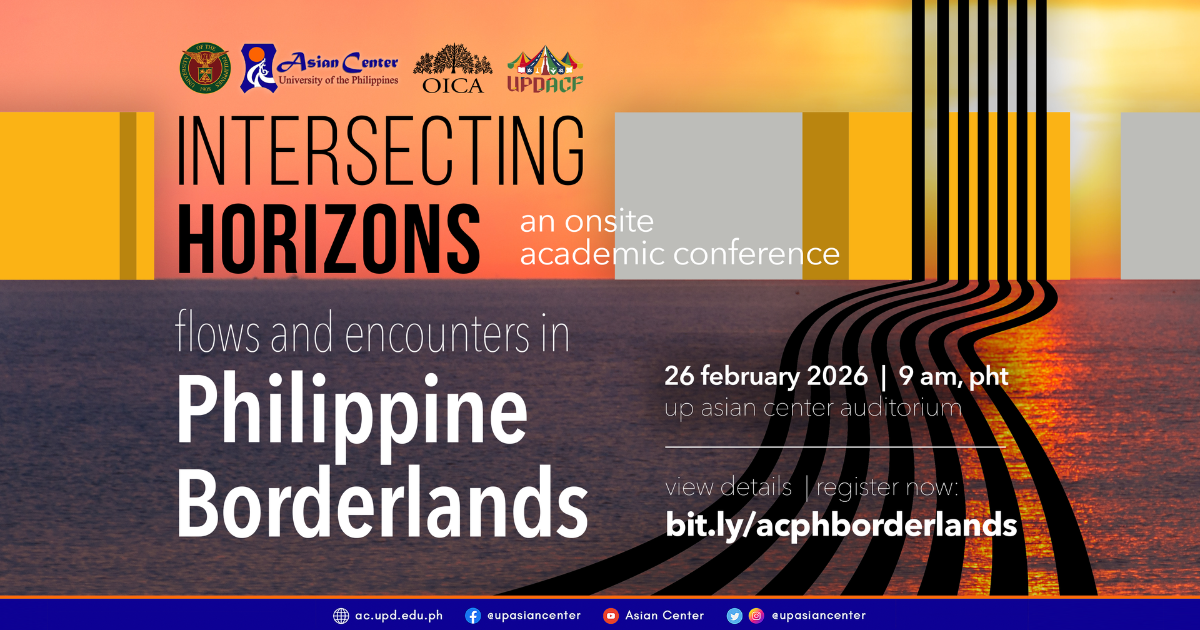
The UP Asian Center, with the support of the UP Diliman - Office of Initiatives for Culture and the Arts (OICA), is CALLING FOR PARTICIPANTS for the Onsite Academic Conference, “Intersecting Horizons: Flows and Encounters in Philippine Borderlands” on 26 February 2026, Thursday, 9 AM (Manila Time). The conference is FREE and open to the public. Food and conference materials will be provided but SLOTS ARE LIMITED.
ABOUT THE CONFERENCE
This conference focuses on cultural encounters and the flows of ideas and goods across and within the Philippine borderlands. It highlights the dynamic, sometimes contested, spaces where diverse cultures intersect and interact, and which have historically produced hybrid and cosmopolitan societies. This conference highlights various Philippine borderlands: the northern (bordering Taiwan), southwestern (bordering Malaysia, Brunei, and Indonesia), and southern regions (bordering Indonesia).
- What historical processes led to the making of these regions as "borderlands?"
- How do these borderlands serve as conduits for transnational flows of goods, ideas, and people?
- How are state- produced "marginalities" reflected in their current political and cultural landscapes?
- How are these different Philippine borderlands similarly or differently entangled in international geopolitical affairs?
As part of the 2026 Arts and Culture Festival of the UP Diliman Office of Initiatives for Culture and the Arts, the conference, in line with the festival theme “Isang Unibersidad para sa inklusibo at mapagkalingang lipunan,” we seek to recognize the multifaceted dimensions of the Philippine borderlands with an emphasis on the marginalization faced by communities and spaces intersected by the Philippine borders. This also recognizes the multidisciplinary requirements for undertaking a deeper analysis of Philippine borderlands. As such, this conference seeks cooperation and recognizes the importance of arts and humanities, social sciences, and the natural sciences in understanding these spaces.
ABOUT THE CONFERENCE PROGRAM
8:30 AM Start of Registration
9:00 AM Opening Program
Philippine National Anthem Opening Remarks JOSE CARLO G. DE PANO, PH.D. Welcoming Remarks MONICA FIDES AMADA W. SANTOS, PH.D. Welcome Message NOEL CHRISTIAN A. MORATILLA, PH.D.9:00 AM --- Opening Ceremonies
Vice Chancellor for Student Affairs, University of the Philippines Diliman
Director, Office of Initiatives for Culture and the Arts, University of the Philippines Diliman
Dean and Professor, Asian Center, University of the Philippines Diliman
9:15 AM KEYNOTE PANEL: Multi-Disciplinary Perspectives on Philippine Borderlands
Atty. Jay Batongbacal is a lawyer and professor at the UP College of Law. He took a Doctorate in the Science of Law at Dalhousie University in Canada (2010). He obtained his Master's degree in Marine Management (1997) at the University of the Philippines College of Law. His dissertation analyzed the relationship between ocean energy development and its effects on adjacent coastal communities from an ecological-social-justice perspective. His career in marine policy research spans marine territorial issues, international maritime boundaries, high seas fisheries, maritime security, seafaring, coastal resource management, marine environmental protection, and archipelagic studies. He currently serves as the Director of the Institute for Maritime Affairs and Law of the Sea. Dr. Joefe B. Santarita is a Professor at the Asian Center, University of the Philippines Diliman. He earned his Ph.D. in South Asian Studies from the National University of Singapore in 2012, following an M.A. in Asian Studies with a focus on Southeast Asia from the same institution in 2004. Dr. Santarita began his academic journey with a B.A. in History-Community Development from the University of the Philippines in the Visayas in 1997. His extensive educational background has equipped him with a profound understanding of Asian cultures, histories, and political economies. Dr. Santarita has made significant contributions to these fields through his research and publications specializing in Indian studies, migration studies, Philippine culture and society, maritime history, and Southeast Asian political economy. Dr. Joseph Palis currently teaches as a professor in the Department of Geography of the University of the Philippines Diliman. He obtained his Ph.D. in Geography from the University of North Carolina at Chapel Hill and his Master’s degree in Geography from UP Diliman. Dr. Palis currently leads the Geonarrative Mapping project, which gathers stories from maps, mappings, and map-making practices. He also sits as co-editor of the Palgrave Macmillan Pivot Series for Geographies of Media and co-convenes Film Geographies. He specializes in countercartographies, geohumanities, island & archipelagic geographies, and media geographies.Keynote Panel: Multidisciplinary Perspectives on Philippine Borderlands
Venue: GT-Toyota Asian Center Auditorium
Moderator: Dr. Ariel Lopez
JAY BATONGBACAL, J.S.D.
Director, Institute for Maritime Affairs and Law of the Sea, U.P. Law Center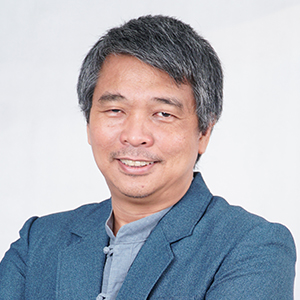
JOEFE B. SANTARITA, Ph.D.
Professor, Asian Center, UP Diliman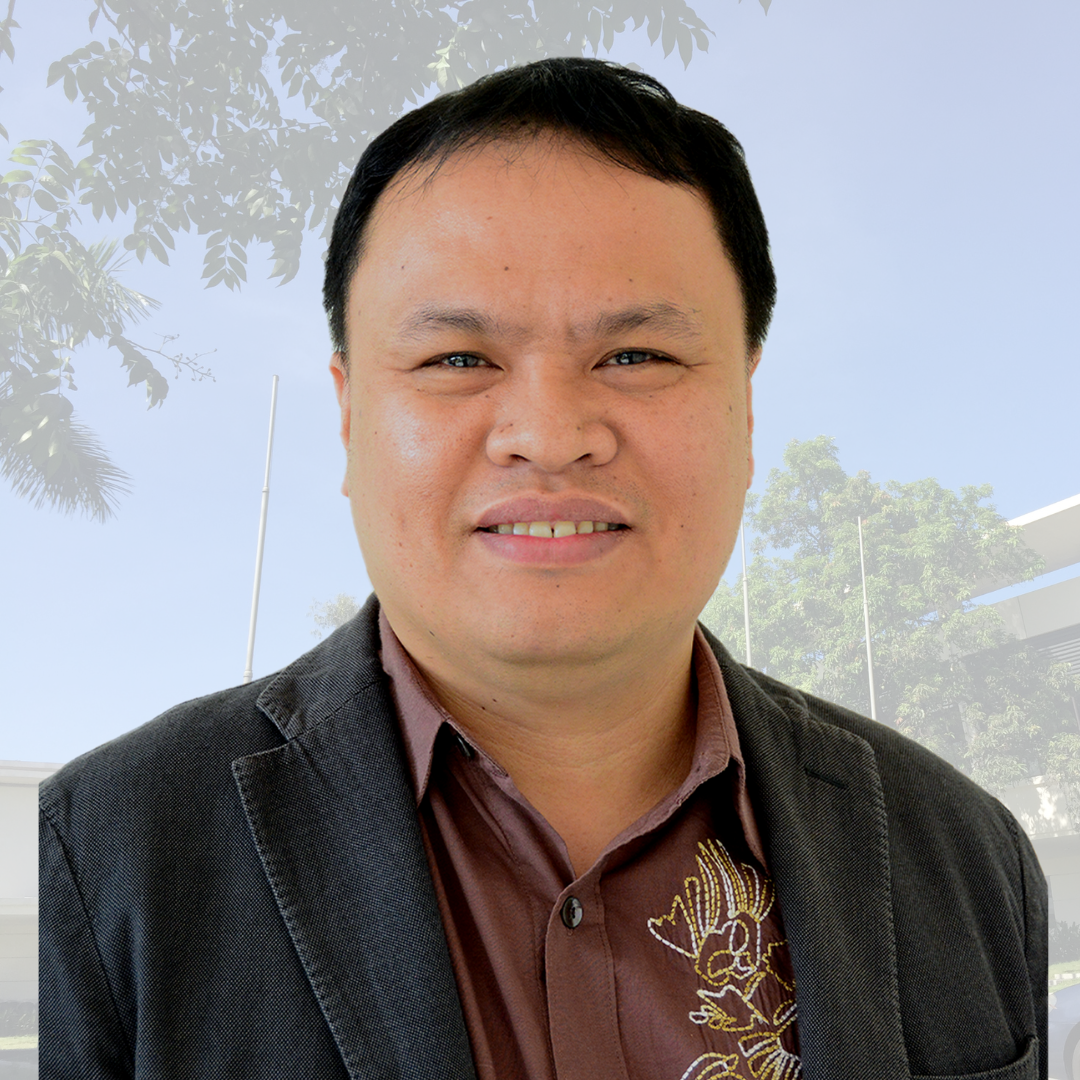
JOSEPH PALIS, Ph.D.
Professor, Department of Geography, UP Diliman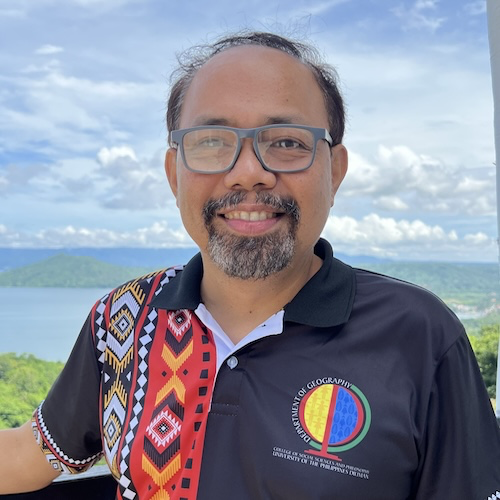
MARK ALEXANDER C. DIZON, Ph.D.
Assistant Professor, Ateneo de Manila UniversityDr. Mark Dizon is an Assistant Professor in the Department of History at Ateneo de Manila University, where he specializes in early modern cross-cultural encounters, empires, borderlands, and historical mobilities. Drawing on extensive archival research, his work explores how people, ideas, and maps shaped colonial encounters and identities in the Spanish Philippines and beyond, with publications in peer-reviewed journals such as Colonial Latin American Review and Itinerario. His scholarship contributes to a deeper understanding of historical interconnectedness and the dynamics of imperial frontiers, advancing both academic knowledge and broader discussions on peace, justice, and strong institutions in line with global development goals. Outside of teaching and research, Dr. Dizon actively engages in scholarly discourse through conference presentations and collaborative projects that bridge local and global historical
10:45 AM Expert Panels Parallel Session
Dr. Aliya Peleo earned her Ph.D. from the Institute of China and Asia-Pacific Studies at National Sun Yat-sen University in Kaohsiung, Taiwan. She has an MA in International Development from the Graduate School of International Relations at the International University of Japan in Niigata, Japan. She has worked on a number of development projects in Central Asia with UNESCO, the Peace Corps/Kazakhstan, USAID, and ADB. Her research interests include biopolitics, cultural symbolism and identity, regionalism, international norms and development, and agriculture. Dr. Ronald A. Pernia is an Assistant Professor of Political Science at Ateneo de Manila University whose research explores the intersection of comparative politics and political psychology. An award-winning scholar, he earned his Ph.D. from National Sun Yat-sen University and completed a postdoctoral fellowship at the Taiwan Foundation for Democracy, focusing on how threat perception influences political trust and democratic resilience. His extensive body of work is featured in prestigious international journals such as Democratization and the Journal of East Asian Studies, and he is currently finalizing a book with Routledge titled How Threat Perception Strengthens Governments and Authoritarian Alternatives: From Trust to Power. Utilizing mixed methods—ranging from survey analysis to computational text analysis—Dr. Pernia provides critical insights into authoritarian values and governance across the Philippines and the broader Asian region. Ret. Lt. Gen. Michael Lee currently serves as the Deputy Chief of Mission of the Taipei Economic & Cultural Office in the Philippines. He also served as Deputy Chief in the Republic of China Armed Forces. Deputy Representative Lee finished his MBA at the National Taiwan University in 2016, and also graduated from the Graduate Institute of National Development of the same University in 2020. He also studied Strategy Studies at Harvard University's Kennedy School. As TECO Deputy Representative, Lt. Gen. Lee is currently active in building collaborations between Taiwan and the Philippines, including through his recent visit to establish agricultural and cultural partnerships with Batanes. Tamara Ann Tinner has a bachelor’s degree in History and Islamic Studies and a master’s degree in History and Arabic from the University of Zurich in Switzerland. She is currently a PhD student in History in the Global Humanities Programme at Linnaeus University in Sweden. She is also a member of the Centre for Concurrences in Colonial and Postcolonial Studies. Her PhD project explores Global Fashion History, which begins locally in the Southern parts of the Philippine archipelago, namely Mindanao and Sulu. The main purpose of her thesis is to challenge and to problematize normative ways of history writing by exploring methodological approaches such as cross-analysis of textual, visual, and material culture. Mr. Mohammad is currently a University Researcher II of the Institute of Islamic Studies. He is also a Ph.D. candidate and is currently enrolled at the University. He has presented papers at local and international conferences and dialogues. He has also published various papers and articles in both English and Filipino. His studies revolve around Islamic Studies, Media Studies, Indigenous Studies, Muslim Filipino History, and Interfaith Dialogue. He is also a member of the Research Association for Islamic Social Sciences, Inc. (RAIS) and Kapisanan ng mga Brodkaster ng Pilipinas (KBP). Fahadz Lulu is currently an assistant professor at the School of Arts and Sciences, Philippine Women’s University, and is a seasoned academic scholar with a diverse background in teaching and debate coaching in both the Philippines and China. He holds a master’s degree in Asian Studies from the Asian Center, UP Diliman, which highlights his expertise in regional studies and cultural understanding. His work centers on the Tausug and Kolibugan communities, religion, and indigenous cultures, while also examining environmental and social issues, including evacuation centers and bedroom communities across the Philippines and Southeast Asia. Dr. Aaron Jed Rabena is an Assistant Professor at the Asian Center, University of the Philippines Diliman. He earned his Ph.D. in International Relations from Shandong University in China. Dr. Rabena has written extensively on his areas of interest, namely, Strategic Studies, Greater East Asian Geopolitics and Multilateral Politics, Political Risk, and Chinese Politics and Foreign Policy.Expert Panel 1 : On the PH Northern Borderlands
Venue: Seminar Room
Moderator: Dr. Michelle R. Palumbarit
ALIYA S. PELEO, Ph.D.
Assistant Professor, Asian Center, UP Diliman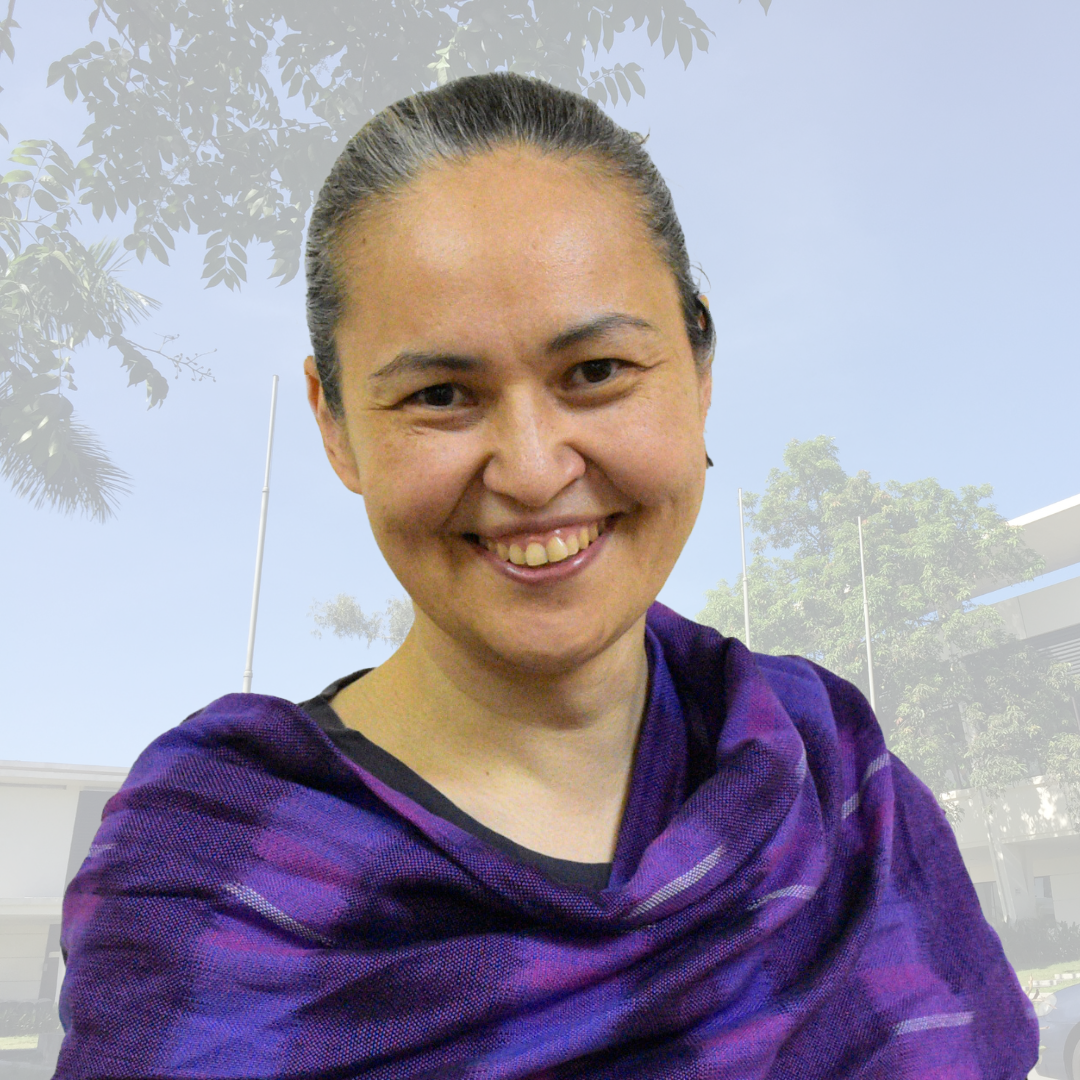
RONALD A. PERNIA, PH.D.
Assistant Professor, Ateneo de Manila University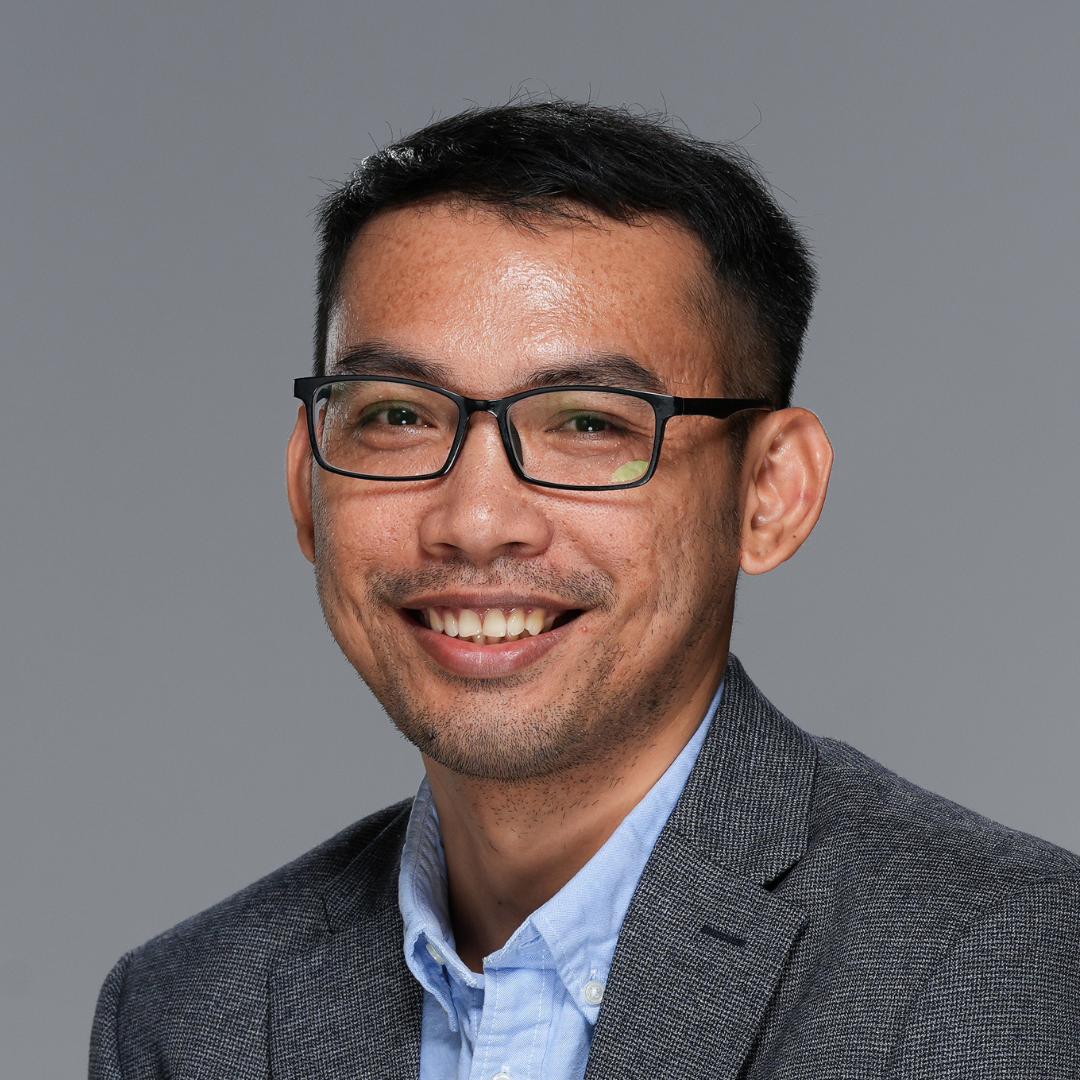
LT. GEN MICHAEL TING-SHENG LEE, PH.D.
Deputy Representative, Taipei Economic and Cultural Office in the Philippines (TECO)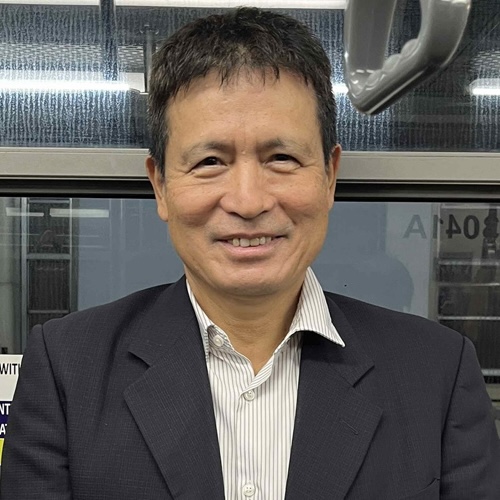
Expert Panel 2 : On the PH Southern Borderlands
Venue: Japan Hall
Moderator: Dr. Maria Cecilia T. Medina
TAMARA ANN TINNER
Department of Cultural Sciences, Linnaeus University, Sweden
KAMARRUDIN BIN ALAWI MOHAMMAD
University Researcher, Institute of Islamic Studies, University of the Philippines Diliman
FAHADZ M. LULU
Assistant Professor, Philippine Women’s University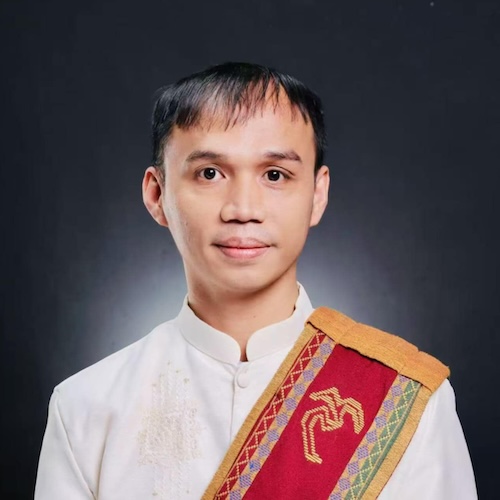
AARON JED RABENA, PH.D.
Assistant Professor, Asian Center, University of the Philippines Diliman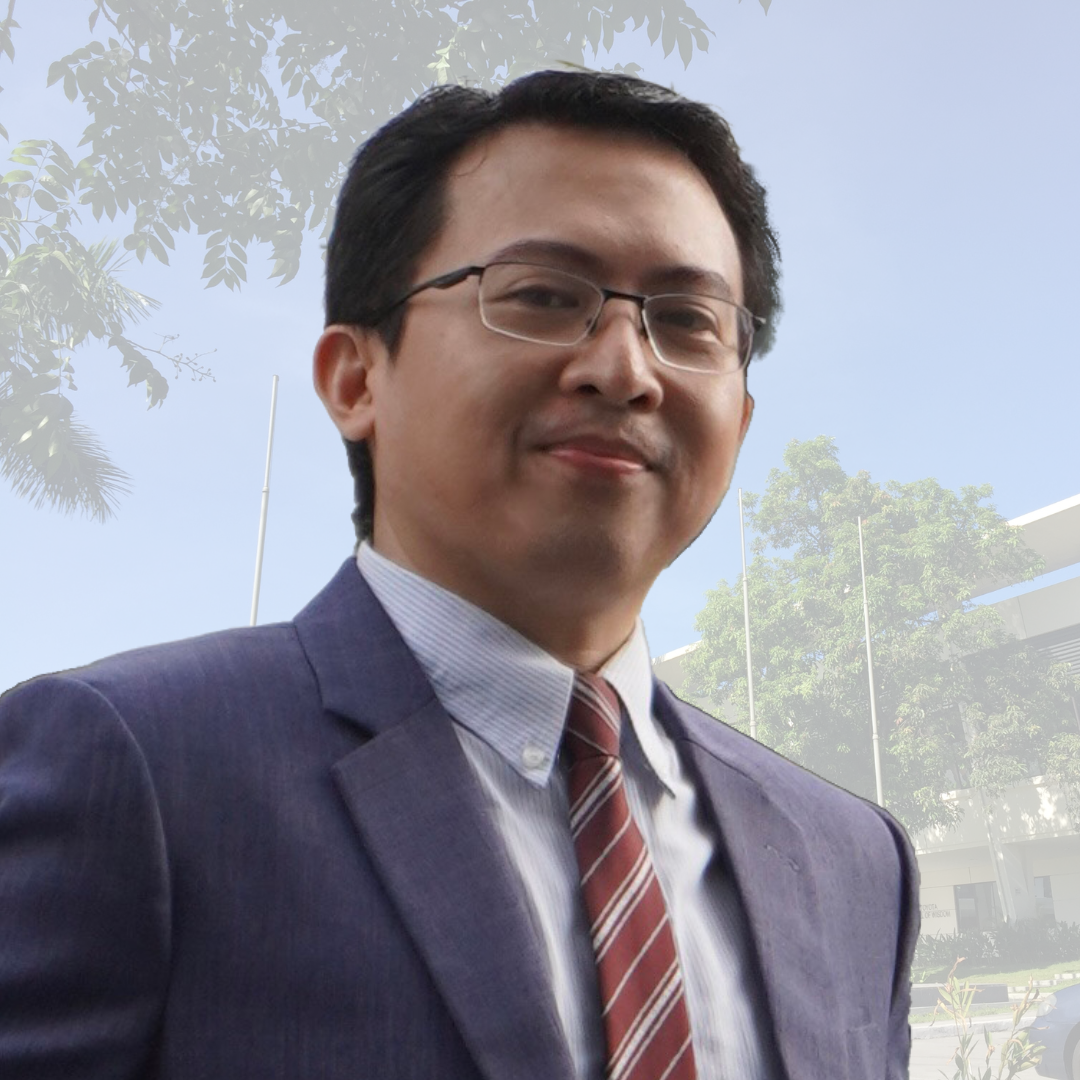
12:15 PM Lunch Break
1:00 PM PARALLEL SESSION 1 : Student Presentations
This paper examines how external geopolitical shock scenarios expose structural limits in the political and economic institutional capacity of the Philippines amid the erosion of the rules-based order in the Indo-Pacific. It proposes the Pentagon of Peril as a qualitative, scenario-based stress-testing framework for assessing how archipelagic states absorb and respond to geopolitical strain. Five hypothetical vulnerability scenarios—Taiwan, the South China Sea, the Sulu Archipelago, the Pacific Ocean, and Palau—are treated as external shock vectors rather than territorial claims. Using a realist–constructivist framework, the study analyzes how material asymmetries, alliance dependencies, and contested maritime spaces interact with institutional narratives of sovereignty, national identity, and risk perception. The paper employs qualitative document analysis of defense policy texts, strategic assessments, and secondary geopolitical data to trace patterns of institutional strain across governance, economic coordination, and decision-making capacity. The analysis demonstrates that vulnerabilities are not uniformly distributed but spatially concentrated, revealing systemic weaknesses characteristic of a middle power with weak-state features. By reframing geopolitical risk as an institutional stress test rather than a strategic overview, this study contributes an analytically disciplined model for understanding archipelagic vulnerability and anticipatory governance in the Philippines. Philippine borderlands are, in many ways, often portrayed as peripheral, yet they are dynamic spaces where state-imposed identities are contested and destabilized. It is in these spaces, the paper argues, the State’s efforts to consolidate a stable identity, through its various state apparatuses, encounter the frictions of distance and dense transnational circulation. Under the guidance of Althusser’s theory on Ideology, this paper examines how government policies and media function to produce a coherent national identity. Notwithstanding the State’s efforts, distance from the state ‘center’ and persistent transnational flows of people, goods, and ideas undermine this project. Everyday material practices in borderlands— informal trade, multilingual communication, and local social networks — result in the subversion or reinterpretation of state narratives. Through the lens of Butlerian performativity, the paper analyzes how identity, and ideology, is actively enacted and transformed in practice, rather than solely being fully imposed from above. These suggest that borderlands could be interpreted as arenas where the State’s ideological project is continuously negotiated and eroded, whereupon hybrid and plural forms of identity are produced. By focusing on these practices, the study demonstrates the fragility of state identity in contexts shaped by historical, cultural, and transnational flows. This paper examines how spirituality operates in Philippine borderlands as a social force that exceeds the limits of the nation-state and generates emancipatory spaces among marginalized communities. It seeks to explain how shared belief, ritual practice, and moral relations sustain solidarity, ethical restraint, and collective agency where state authority is fragmented or absent. The study employs qualitative interpretive analysis combining historical reading, ethnographic literature, and social theory. Ibn Khaldun’s theory of ʿasabiyyah is used to analyze the formation of group cohesion and moral solidarity, while the Filipino concept of pakundangan frames relational ethics grounded in mutual regard, restraint, and respect. These lenses are applied to documented cases of religious practice and everyday spirituality in peripheral Philippine communities. The paper finds that spirituality in borderlands functions as a form of moral infrastructure. Through ʿasabiyyah, belief systems cultivate bonds that enable cooperation, resilience, and responsibility beyond formal institutions. Pakundanganmoderates power, preventing domination and sustaining ethical coexistence across difference. Together, these dynamics produce emancipatory space,social arenas where dignity, agency, and belonging are affirmed despite political exclusion. Spirituality thus emerges not as withdrawal from politics but as an alternative mode of social ordering at the edges of the nation. The Southern Philippines has long been witness to the ebb and flow of conflict. A result of the peace process that took years in the making is the Bangsamoro Autonomous Region in Muslim Mindanao (BARMM), which represents a significant milestone in the transition to a post-conflict society. Within this context, the Bangsamoro Youth Commission (BYC) is mandated to promote youth development and empowerment. Meanwhile, hybrid peacebuilding and its influence in enabling the youth to shape the form of peace in the region remain underexplored. The study examines how hybrid peacebuilding, through the BYC, enables youth agency and contributes to the emergence of particular forms of peace. Using a qualitative case study based on semi-structured interviews and thematic analysis, the study analyzes youth introspections on youth agency through the Four Rs: Recognition, Redistribution, Representation, and Reconciliation. The study showed that hybrid peacebuilding in the region widens youth agency through recognition, representation, and redistribution. Furthermore, it has been shown that youth agency generates both emancipatory and everyday forms of peace. Both of which are mutually reinforcing for peace, rather than serving as preconditions. The study contributes to peacebuilding studies by demonstrating hybrid peacebuilding’s influence on youth agency in shaping peace within BARMM. Mangal-ala: A Translingual Poetics is a critical examination of the poetry collection of ‘Water Memory’ that foregrounds water thinking and buoyancy in its creative praxis. Drawing from the three Philippine aquatic landscapes—Cordilleran river systems, La Union’s coastal waters, and Metro Manila’s urban waterways—as contested sites of ecological violence, cultural memory, and linguistic fluidity. Drawing from Blue Humanities frameworks (Mentz, Oppermann), the work investigates how water shapes both physical and poetic spaces, employing the concept of "buoyancy" to navigate between languages (Ilocano, Filipino, English) and embodied experiences. The poems document Indigenous resistance against Cordillera’s dam projects alongside the Cagayan River’s flooding crises exacerbated by black sand mining, framing rivers as corporeal archives of struggle. More so, it interrogates La Union’s gentrified shores, where reclamation projects and pollution disrupt fisherfolk lifeways in San Fernando, rendering the ocean a palimpsest of erasure. Lastly, the project also examines Metro Manila’s hydraulic paradoxes—monsoon rains, sewage systems, and chlorinated pools—exposing the city’s fraught dependency on manipulated waters. Formally, the collection engages translingual poetics as an aesthetic parallel to water’s permeability, using linguistic shifts to mirror tidal movements between memory and present violence. The central metaphor of buoyancy—inspired by Mentz’s poetics of planetary waters—serves dual purposes: as poetic resistance against cultural submersion, and as a craft strategy to float meaning across linguistic boundaries. By interweaving personal themes of queerness, disability, and urbanization with national ecological crises, Mangal-ala: A Translingual Poetics positions water as both witness and actor in Philippine narratives of displacement, crafting the confessional lyric as an archive where fluidity becomes a mode of survival. Isinagawa ang pananaliksik na pinamagatang “E-Bangka: Pagsisid sa Rehistro ng Lingguwakultural sa mga Piling Barangay sa Bayan ng Vinzons, Camarines Norte” upang maitala, mapanatili, at maipalaganap ang mga salaysayin at terminolohiyang ginagamit ng mga gumagawa ng bangka bilang bahagi ng kanilang pagkakakilanlan, kasaysayan, at kultura. Layunin ng pag-aaral na tipunin ang mga salitang kaugnay ng paggawa ng bangka mula sa pagpili ng materyales hanggang sa pagbuo ng mga bahagi nito, gayundin ang paglalarawan sa pagkakakilanlan, kasaysayan, gawi, paniniwala, at pamamaraan ng mga gumagawa nito. Ginamit ang mixed method approach, kung saan isinagawa ang panayam na sinamahan ng pakikipagkuwentuhan upang mapalalim ang datos. Pinili ang mga kalahok mula sa Barangay Cagbalogo, Sabang, at Sula gamit ang purposive sampling. Ipinakita ng resulta na ang paggawa ng bangka ay isang mahalagang tradisyong ipinapasa mula sa magulang patungo sa anak at may kaakibat na mga gawi at paniniwala upang matiyak ang kalidad ng bawat bangka. Mula sa mga datos, binuo ang E-BANGKA, isang mobile application na naglalaman ng mga salaysay at terminolohiya. Alinsunod sa CHED Memorandum Order No. 75, s. 2017, layunin nitong palalimin ang pag-unawa ng mga mag-aaral sa ugnayan ng wika, kultura, at lipunan bilang bahagi ng lokal na pamana. A quick search of YouTube videos about Philippine cuisine or Pinoy food displays not only the local food being featured but also the content creator. Particularly, foreign content creators document their Filipino food experience, in which Filipino viewers do not shy away from commenting. This study explored the cultural interaction that occurs when Filipinos comment on foreigners' presentation of Philippine cuisine. 300 Filipino-authored comments were analyzed and sampled from 20 videos of foreigners doing street food adventures, first-time reactions, cultural comparisons, cooking Philippine cuisine attempts, and reviews of Filipino restaurants. Such analysis addressed first, the ways Filipinos responded to the transcultural affinity of the foreign content creators (or the effort of outsiders to respect another culture); and second, the manifestation of self-exoticization in the comments (or the highlighting of Filipino cultural nuances). The comments conveyed the Filipino commenters’ enthusiasm towards the foreigner’s display of transcultural affinity in their videos. Such content provided a fostered space for cultural exchange, gustatorial desire, sentimentality, and genuine representation. Furthermore, several comments verbalized their strategic intentions in negotiating Philippine cuisine to be appreciated, recognized, and welcomed by the foreign content creator and their global audience. The wide yet cohesive spectrum of such Filipino comments pertains to the convergences and divergences between the readings of foreigners’ transcultural affinity and self-exoticization. This study posits that Filipino commenters co-share and co-create their understanding of Philippine cuisine with foreign content creators. This study also promotes the practice of cultural sensitivity to both producers and consumers of cultural food media. The exodus of Vietnamese refugees after the end of the Vietnam War transformed maritime and coastal peripheries into humanitarian-security frontiers, or what I call refugee borderlands. The Philippine First Asylum Camp (PFAC), which was established in 1979 (and officially closed in 1996), served as a community-like refugee camp for Vietnamese refugees. It was located in Palawan, a geographically peripheral island province in the country. The camp was intentionally constructed away from metropolitan centers, and this (em)placement reflects a classic borderlands logic: distance from the political core enables containment, monitoring, and exceptional governance while minimizing perceived threats to national identity and security. This paper investigates how the PFAC was spatially constructed and negotiated by the Philippine government, the military, international organizations such as the UNHCR, volunteers, and the refugees themselves. Through an analysis of executive orders, proclamations, UNHCR reports, and photographs, refugee borderlands, such as PFAC, is revealed to be sites of negotiated sovereignty. PFAC was not merely a humanitarian space for refugees but a laboratory of sovereignty. It exposed how the Philippine state managed mobility, how international organizations structured displacement, and how the Vietnamese refugees exercised their agency within the constrained terrains of the Philippine First Asylum Camp. Borderlands are often understood as geographic edges of the state, yet they are also produced within everyday institutions that shape belonging. In the Philippines, schools become centers for children to engage with their nationality and shared identity despite being situated in regions where history, culture, and politics differ from dominant national narratives. Drawing from Benedict Anderson’s concept of nations as imagined communities and Louis Althusser’s concept of the school as an Ideological State Apparatus (ISA), this paper delves into how Philippine schooling functions as a site of border-making by shaping how children in marginalized contexts are taught to imagine themselves as members of the nation. Utilizing Critical Discourse Analysis (CDA), the study aims to analyze how key official curriculum texts by the Department of Education (DepEd) such as curriculum guides, teaching modules, and policy texts, construct national identity, rather than treating educational materials as neutral content. By arguing that classrooms function as sites where border-making takes place and not just knowledge transmission, the study contributes to borderlands scholarship beyond territorial frameworks and underscores the role of education in cultivating national identity and a sense of belonging among children. This paper examines Roque Ferriol’s notion of “pagbigkas ng meron” (utterance of being) in relation to meaning-making and the argument that language becomes a repository for “being” through a feminist philosophy of language and a critique of the third chapter of Ferriols’ Pambungad sa Metapisika. This study situates meaning-making and feminist rhetoric within epistemic and linguistic borderlands where experiences of non-utterance function as grounding for a posthumanist culmination and indigenized philosophy of language. Through a post-humanist-feminist reading of Ferriols’ articulation of “pagmemeron”, lived experiences of those that have embodied “non-utterance” serve as a rhetorical force and a critique of dominant linguistic regimes (e.g. logocentrism). In this direction, non-utterance is not entirely the absence of speech but rather a situated place of meaning which emerges from lived experiences of marginalized bodies whose linguistic practices and meaning-making are shaped by constraint and relationality. The paper interrogates whether Ferriols’ emphasis on utterance reinforces logocentric dominance or enables non-dominant meaning-making where non-utterance is accommodated. It argues that silence operates as a space where meaning and being-as-lived are constituted, and proposes an indigenized posthumanist feminist extension of Ferriols toward an interdisciplinary and cross-boundary understanding of meaning beyond speech. Teresa Ebert once underlined the contradictions in global capitalism’s zealous celebrations of the freedom of movement it supposedly allows: only capital, not labor, has greater freedom to circulate and move around the world. Borderlands become more penetrable for capitalists, while workers face varying stringencies when it comes to finding work outside of their countries. A slight revision is also applicable: labor can move around but not under conditions of its choosing. This is the sprinkle of thought activated in Norman Wilwayco’s novel Migrantik, detailing the life and struggles abroad of the titular migrant, Tony De Guzman. This paper will paint Tony’s conditions of not being a touristy traveler, but a journeying worker abroad—specifically in Australia, just south of the Philippines—positioned in the precarious labor situation of global capitalism. Through a close reading of the novel and Tony as a wandering figure, this paper will elaborate the contradictory tendencies surrounding the notion of “borderlands”: they both constrain and enable different modes of living and moving about, inviting strategies that may reinforce or challenge the capitalist status quo. The United States has long been a key destination for Filipino migrants and overseas Filipino workers seeking better employment opportunities and livelihoods. Remittances from these migrants serve as a crucial source of income for Filipino households and significantly support the Philippine economy (Maligro, 2025). However, Trump's return to office in 2025 introduced stricter visa and immigration policies, including higher visa fees, tighter work permit issuance, and heightened deportation risks. These changes created growing uncertainty among Filipino migrants regarding their job security, legal stability, and access to opportunities in the United States. As immigration controls intensifies, remittance flows to Filipino families face greater pressure, threatening household financial and economic stability. This study addresses the question: How do Filipino remittance-receiving households adapt to the perceived threats of Trump 2.0 visa policies to the job security of Filipino migrants in the United States? Semi-structured qualitative interviews were employed paired with U.S-based Filipino migrants and their remittance-dependent households in the Philippines. Guided by the New Economics of Labour Migration Theory (NELM) and Transnationalism Theory, it examines how the Trump 2.0 visa and immigration policies reshape labor precarity, remittance flows, and household economic strategies within a shifting U.S.-Philippine political economy.Panel A: Institutions, Space, and National Identity within the Philippines Borderlands
Venue: Seminar Room
Moderator: Dr. Aliya S. Peleo
The Pentagon of Peril: Institutional Capacities under Geopolitical Vulnerabilities of the Philippines in the Indo-Pacific Region
JOHN EZRA NOBLE
New Era University
Where Interpellation Falters: Borderlands and the Fragility of State Identity in the Philippines
ARON MALONZO
National University, Clark
Where the Nation Ends but Belief Continues: Borderlands, Spirituality, and the Production of Emancipatory Space
PAUL MARK C. ANDRES
TriCollege Ph.D. Philippine Studies Program, University of the Philippines Diliman
Emancipating the Everyday: Retrospections of youth agency in the Bangsamoro Youth Commission on Hybrid Peacebuilding
JOSS GABRIEL OLIVEROS and FRANCHESCA ERICA B. FACTOLERIN
University of Santo TomasPanel B: Blurring Boundaries: History, Language, and Culture
Venue: Japan Hall
Moderator: John Lemuel T. Magnaye
Mangal-ala: A Translingual Water Poetics
BENJAMIN AMBROS KING SUMABAT
Department of English and Comparative Literature/College of Arts and Letters, University of the Philippines Diliman
E-BANGKA: Pagsisid sa Rehistro ng Lingguwakultural sa mga Piling Barangay sa Bayan ng Vinzons, Camarines Norte
PIOLO AGUILAR, SHERLYN DIAZ, and ROSE ANN ALER
College of Education, Camarines Norte State College
“Love seeing you enjoying it guys!!”: Filipino Commenters’ Readings of Foreigners’ Transcultural Affinity in Videos about Philippine Cuisine
JESTER VINCE DE TORRES
Department of Communication Research, University of the Philippines Diliman
Refugee Borderlands: The Space-Making of the Philippine First Asylum Camp, 1979-1996
NICOLE MARGARET VILLABROZA
Department of History, University of the Philippines DilimanPanel C: Borderlands: Discourses on Labor and Education
Venue: ASEAN Hall
Moderator: TBC
Imagining the Nation at the Margins: Education and the Production of Internal Borderlands in the Philippines
SHEIKH CLYDE MANALO
National University, Clark
Non-Utterance and Meron and Pagmemeron (Being and Being-as-Lived): Meaning-Making in the Feminist Philosophy of Language Through a Posthumanist and Philosophical Examination of “Feminist Rhetoric,” Epistemic and Linguistic Borderlands
Jancern Angela Merici Labong
University of the Philippines Diliman
Bordering on Being Mad, or Being Damned? Tony de Guzman’s Encounters with Borderlands in the novel Migrantik
IVAN EMIL LABAYNE
TriCollege Ph.D. Philippine Studies Program, University of the Philippines Diliman
On Shifting US Visa Policies, Job Security, and Remittance Dependencies: Impact of the Trump 2.0 Era on Filipino Migrants and Remittance-Dependent Households
ZOE ANG, AALIYAH GARCIA, NIKKHO PENALBA, and FRANCIS DE LEON
De La Salle University, Manila
2:15 PM PARALLEL SESSION 2 : Student Presentations
Observedly, the Philippine borderland of Sulu is an area enriched by a history of trade, sultanates, colonial missionization, and securitization, as such, it emerges as a convergence of religion, culture, and politics. This paper brings to light a particular case: Notre Dame of Jolo-Kasulutan (NDJ-K), a Catholic school run by the Marist brothers. As a qualitative case study, the paper draws on interviews with school administrators and community members, as well as analysis of certain institutional documents, to explore how ecumenism is practiced within a Muslim-majority context. The study argues that Marist educational culture in Notre Dame of Jolo elevates the ordinary academic experience to a negotiated religious encounter, where Catholic pedagogy coexists with local Islamic sensibilities through dialogical engagement, inclusive school practices, and community-oriented initiatives. To add, the study finds that the school’s ecumenical practices are plausible ways to navigate the broader conditions of marginality, limited resources, and the geopolitics of the southern Philippines. With education characterized as a lived space of interfaith interaction, this work contributes to borderlands scholarship by highlighting how certain institutional practices foster coexistence and cultural mediation beyond dominant narratives of conflict in the southern Philippine borderlands. This study covers the cultural history of music in Barangay Iglungsad, San Fernando, Bukidnon, Philippines, with a focus on the indigenous music of the Tigwahanons, aimed to provide a historical account of the music of this community. The study employs both narrative and descriptive methods, using primary and secondary sources to gather data. The key informants in this study were interviewed to gain insights into the functions of music in the Tigwahanons community, as well as their traditional music composition and preservation methods. The researcher also examined the ways in which the music reflects the culture, beliefs, and values of the community. This study is significant as it sheds light on the cultural history and significance of music in the Tigwahanons' community and provides a valuable contribution to the broader field of cultural history. The study found that Tigwahanons use music for entertainment, communication, socialization, spiritual rituals, and cultural expression. They compose using traditional instruments, incorporating elements of their culture and history. The community preserves their music through community events, teaching, and documentation. The historical analysis of the cultural history of music provides a valuable insight into the historical development and evolution of music in relation to the social, cultural, and historical context in which it was created. It highlights the importance of preserving musical traditions and the role they play in shaping the cultural identity and heritage of the Tigwahanons. The Philippine borderlands have been historically defined and constructed through mobility, state power, and transnational networks. This paper examines smuggling and contraband practice in the Philippine borderland as constitutive of the fundamental tensions between state sovereignty and lived realities where borderland communities continuously negotiate their claims to space, mobility, and belonging. Situating contraband flows in the Sulu Sea corridor connecting Mindanao with Sabah and eastern Indonesia, this paper probes into smuggling operations as reflective not only of criminal deviation but also of the underlying economic and social perils of borderland actors who navigate the paradoxical waves between legality and illegality. Utilizing historical records and archives, ethnographic accounts, and contemporary sources, it examines the continuities of boundary-making from the colonial period to present-day Philippines. It subsequently traces the fusion and transformation of long-standing maritime trade networks into illicit activities. Analyzing the primary categories of contraband flows: natural resources, consumer goods, and human mobility, this paper highlights the varied dimensions of borderland porosity stemming from factors such as kinship networks, weak state enforcement mechanisms, and socio-economic conditions that render informal cross-border flows as necessary and permissible for survival. Ultimately, this paper addresses the issue of contraband flows as manifestations of dynamic and contested zones shaped by marginalized communities exercising agency against structures of exclusion and alienation. Pangalay, a pre-Islamic classical dance tradition from the Sulu Archipelago, is often lauded as a vital cultural link between the Philippines and the larger maritime Southeast Asian world. Since its commencement into extensive scholarship in 1983 and the organization of training programs that subsequently followed outside its place of origin, the dance has also undergone a rapid process of standardization. The emphasis on classification, choreography, movement terminologies, and pedagogical techniques became inseparable from its very expansion and sustainability in the metropole, a sterilized variation that deviates from its otherwise merry-making and entrancing somatic experience in the south. This research advances the position that the pangalay’s urban adoption has led to its inevitable disenchantment, turning the improvisational spontaneity and inward concentration deeply personal to an individual mangangalay [1] into congealed and replicable steps designed to widen its accessibility. Drawing from conversations with several mangangalay, both in the Sulu Archipelago and the diaspora, experienced in dancing the pangalay in its social and cultural context of parkala’ [2], I aim to highlight the often neglected agency that has always animated the dance before its academic debut and capture by a calculative logic in the previous decades. Particularly, I seek to co-articulate how pangalay is subjectively experienced by the dancer in its moment-to-moment instantiation grounded in a distinct cultural valuation system in the Sulu Archipelago. In May 2013, a fatal maritime encounter between the Philippine Coast Guard and a Taiwanese fishing vessel near the Balintang Channel triggered one of the most serious crises in Philippines–Taiwan relations. Despite the absence of formal diplomatic ties, the incident led to economic sanctions, public outrage in Taiwan, and heightened tensions in a maritime corridor long marked by overlapping fishing grounds and cross-border mobility. Drawing on official issuances and public statements from both governments, as well as contemporaneous news reports, the presentation reconstructs the events that happened in the aftermath of the 2013 incident. This paper situates the crisis within the broader context of the Philippines’ ties with Taiwan with emphasis on tbe Balintang Channel’s importance as the country’s northern maritime frontier. During the Second World War, for example, the waters between Luzon and Taiwan formed part of a contested military passage which highlights the channel’s enduring strategic value and relevance to contemporary archipelagic defense. It will be shown that the calibrated response of the administration of then-President Benigno Aquino III, from ordering a thorough investigation of the incident and eventually working out a fisheries enforcement agreement with Taiwan, offers important lessons for alliance management that remains relevant given today’s Indo-Pacific security environment. The small highland ranchería of Baguio in southern Benguet was chartered as a city in 1909, making it the second settlement to go through this process under American colonial rule. Unlike the Manila capital—the first to receive the designation—Baguio City was barely integrated into state-initiated networks of mobility, commerce, and administration by the time of its establishment. This curious case of peripheral urbanization belies a history of colonial state consolidation at its frontiers. From the vantage point of the indigenous societies in these spaces, mobility at the frontier allowed them to engage the state "outside the colonial polity, but within its orbit" (Florendo, February 2015), a condition that has also been described as pericolonialism (Acabado 2017; Paredes 2013 and March 2022). Drawing from urban and ethnohistorical insights, this paper interrogates the role of town-building as a form of territorialization at the edge of the state. The state's unmaking of the frontier ushered in increasingly regulatory relationships between colonial agents and upland communities. As I hope to demonstrate, the history of southern Benguet as a borderland is crucial in elucidating the ways in which the Philippine colonial matrix generated 'new peripheries in old centers' (Paredes, March 2022). This case study analyzes the Ivatans of the Batanes archipelago and the Tao (Yami) people of Taiwan’s Orchid Island (Lanyu) and Green Island (Ludao) through the lens of modern geopolitics. Modern maritime borders have fractured the traditional domain of these indigenous Austronesian people but they share common genetic lineage (Loo et al., 2011) and linguistic links (Ross, 2005). The Bashi Channel separates the Philippines’ northernmost province of Batanes with Taiwan. It is considered as one of the strategic hotspots in the US-China great power rivalry often described as a chokepoint along the "First Island Chain.” Looking at an alternative perspective, the channel serves not just a strategic waterway that facilitates global trade and communications through undersea cables but as a maritime highway that links the indigenous Austronesian people. Modern geopolitics has further complicated this “borderscape” with the U.S. positing its missile systems in Batanes under the guise of joint military exercises with the Philippines, while Taiwan used to dump its nuclear waste on Orchid Island and detained political dissidents on Green Island during the decades-long White Terror regime. By reconceptualizing the Bashi Channel as “borderscapes”, the study uncovers how the Ivatans and the Tao navigate the rigid territorial trap of Westphalian sovereignty and nation-states (Brambilla, 2015). The Southern Ilocos Area in F. Keesing’s Ethnohistory of Northern Luzon examines the connection of the historical, political, and cultural dynamics between upland coastal communities, drawing from evidence collated from Spanish colonial conquest of Northern Luzon and the recorded way of life that these communities still practice to this day. Geography plays a cultural bond to this area; Keesing defined the area as dominantly populated by major mountain groups: Kankanaey, Lepanto, and the Bontok. Apart from mountainous groups, the question for coastal communities' identity emerged as the “Ilocanos” were not identified. In his introduction, Keesing argues for the possibility that upland and lowland communities are from the same common ancestor. By revisiting Keesing’s work, one could identify the Ilocanos of the Southern Ilocos Area by exploring the evidence and ultimately reinforcing the interconnectedness of lowland and upland populations.Panel D: Cultures and Borders: Transcending Boundaries in Southern Philippines
Venue: Seminar Room
Moderator: Danae M. Pantano
Ecumenical Encounters and Educational Practices in the Southern Philippine Borderland: The Case of Notre Dame of Jolo
DAVID NEIL JOSEPH LUMBA and TANYA NICOLE REVERIE
School of Politics and Governance, University of Asia and the Pacific
Historicizing Music: A Cultural History of Music of the Tigwahanon of San Fernando, Bukidnon
JASON MADERAL
College of Arts and Sciences, Central Mindanao University
Business as Usual: Situating Smuggling and Contraband Flows in the Philippine Borderlands
XIAN CHERUBELLE CALAGUI and TRIXIE CONCEPCION
Department of History and Philosophy, University of the Philippines Baguio
The Inner Zone of Pangalay: Reclaiming the Experiential Subjectivity of a Dance
SHARIFUL HASHIM MANSUL
Asian Center, University of the Philippines Diliman
1 “one who dances the pangalay” in Bahasa Sug
2 “social occasion” in Bahasa SugPanel E: Making Sense of the Philippines’ Northern Borderlands
Venue: Japan Hall
Moderator: Jonas Angelo A. Catubay
Crisis in the Northern Philippine Borderlands: Revisiting the 2013 Balintang Channel Incident in Philippines–Taiwan Relations
MARK PERE MADRONA
University of the Philippines Diliman
Peripheral Urbanization in State Borderlands: Insights on Unmaking the Frontier from Southern Benguet
JERAIAH GRAY
Department of History and Philosophy, University of the Philippines Baguio
Reconceptualizing the Bashi Channel through Modern Geopolitics
ADRIAN PAGLINAWAN
Asian Center, University of the Philippines Diliman
Where are the Ilocanos in Southern Ilocos: Revisiting F. Keesing's Southern Ilocos Area in the Ethnohistory of Northern Luzon
MICHAEL ANDREI AVILA, REBECCA MARIE LUCERO, ASHLEY AIRA BUSTAMENTE, GABRIELLA LORAINE LIMPIN, and ANGEL FATIMA LAGITAO
College of Social Sciences, University of the Philippines Baguio
3:30 PM CLOSING ROUNDTABLE : Reimagining Philippine Borderlands
Ka Pabs currently serves as National Chairperson of the Progresibong Alyansa ng mga Mangingisda sa Pilipinas (PANGISDA-Pilipinas), which represents artisanal or small-scale, municipal, and subsistence fishers and fisherfolk organizations. PANGISDA-Pilipinas aims to protect fishing grounds for the livelihood of communities, for the present and future generations. As a fisherman by trade, Ka Pabs continues to advocate for reforming the fishing industry, preserving traditional fishing practices to protect marine resources, and empowering coastal communities. Ka Pabs engages in forums, conferences, and other platforms to raise awareness of issues affecting fisherfolk, such as marine pollution and overfishing by big companies. Xylee C. Paculba is currently a senior lecturer in the Department of Political Science at the University of the Philippines Diliman. She is also an independent consultant to national and international organizations working in international and maritime security, maritime domain awareness, and gender and development. She is a retired Navy Captain with more than two decades of military service in the Armed Forces of the Philippines. She is a member of the Philippine Military Academy “Maliyab” Class of 2004. Maria F. Mangahas is a Professor at the Department of Anthropology, University of the Philippines, Diliman. She has a PhD. in Social Anthropology from the University of Cambridge (2001), and MA in Anthropology from the University of the Philippines Diliman (1994). Coastal and small-scale fishing communities had been an area of research since 1987-88. Long term fieldwork sites are Batanes and Samal Island, Davao Gulf. The ethnographic themes she has explored center on traditional fishing culture and the community economy, and on impoverishment and sharing, as well as tradition and identity born out of the interaction and circulation of people (‘indigenous’ and migrants). From 2009 she looked into the phenomenon of digitized ‘scandals’ and the culture of media piracy in the Philippines, including the unauthorized circulation of pirated DVDs in response to current events as a form of alternative media. More recent research undertakings have been into the history of anthropology in the Philippines, and investigating the apparent absence of the maritime or archipelagic perspective in Philippine Anthropology. Her publications and papers have been on indigenous coastal resource management, ‘gear conflicts’ and changing seascapes, collective fishing technology, notions of ‘luck’ and leadership, the rural as ‘frontier’, digital piracy as alternative media, and maritime anthropology in the Philippines. She was President of the Ugnayang Pang-Aghamtao Inc. (Anthropological Association of the Philippines) in 2014-2017, and is currently Editor of its official journal, Aghamtao. Matteo Piasentini is a Senior Lecturer in the Department of Political Science at UP Diliman. He holds a Master’s degree in Law from the University of Padua (Italy) with a specialization in International Law. He is a former Official at the Italian Ministry of Defense, currently residing in Manila and pursuing a PhD in Political Science (International Relations) at the University of the Philippines Diliman. He is also the Desk Coordinator of the China and Indo-Pacific desk at Geopolitica, an Italian think-tank. He is also a non-resident Fellow at the Pacific Forum and External Analyst for FACTS Asia. His primary research interests encompass Indo-Pacific Minilateralism, the foreign and defense policies of the Philippines, Italy, and European countries' Indo-Pacific engagement.3:30 PM --- Roundtable: Reimagining Philippine Borderlands
Venue: GT-Toyota Asian Center Auditorium
Moderator: Dr. Noel Christian A. Moratilla
PABLO “KA PABS” ROSALES
National Chairperson, PANGISDA-Pilipinas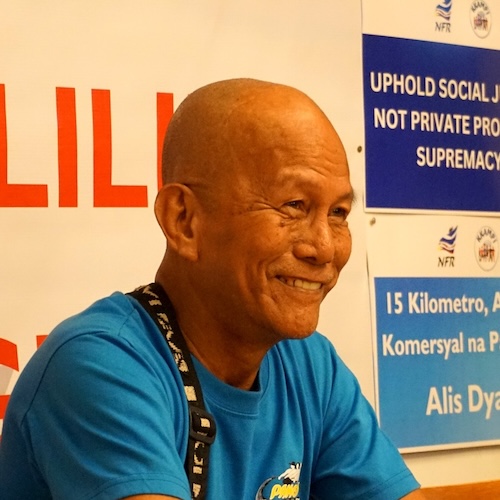
XYLEE C. PACULBA
Senior Lecturer, Department of Political Science, University of the Philippines Diliman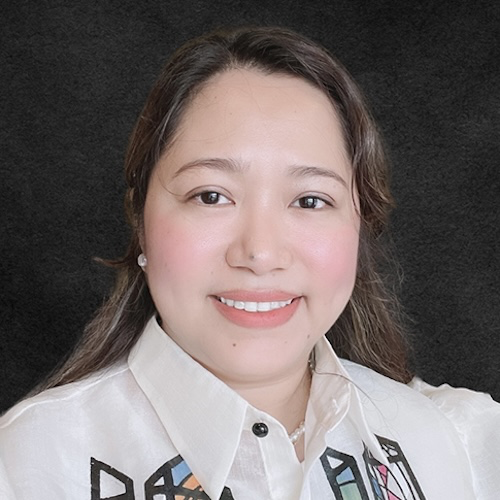
MARIA F. MANGAHAS, Ph.D.
Professor, Department of Anthropology, University of the Philippines Diliman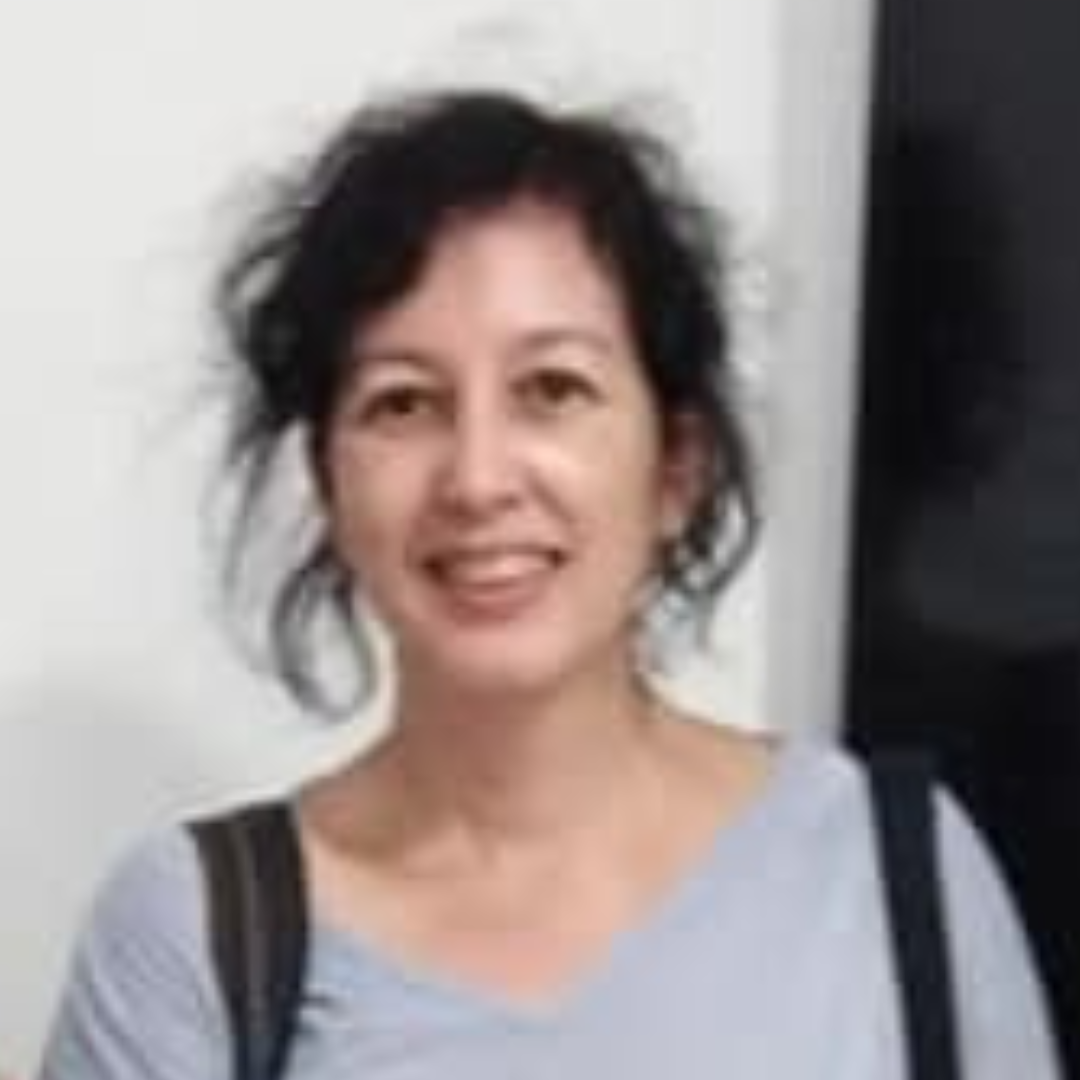
MATTEO PIASENTINI, LLM
Senior Lecturer, Department of Political Science, University of the Philippines Diliman
5:00 PM Closing Program
ABOUT THE ORGANIZER
This conference is organized by the UP Asian Center with the support of the UP Diliman - Office of Initiatives for Culture and the Arts (OICA). This activity is part of the 2026 Arts and Culture Festival of the University of the Philippines Diliman with the theme, "Isang Unibersidad para sa Inklusibo at Mapagkalingang Lipunan" this February 2026. View the activities lined up for the festival!