

The UP Asian Center, the Japan Foundation Manila, in partnership with the UPLB Department of Social Sciences, will hold the UPLB Leg of Japanese Studies in the Philippines: Lecture Forum and Information Session on 26 October 2026, 9:00 AM - 12:00 PM (GMT+8), ONSITE at the CAS Annex 1 Auditorium, University of the Philippines Los Baños. The event is free and open to the public.
ABOUT THE LECTURES AND SPEAKERS
Un-Forgetting Yaeko: The Japanese Studies Dilemma of Japan and Southeast Asia
Yaeko Yamamura (1899-1996), was a Japanese woman who collected shellfish and birds in Basilan in the Philippines from the Taisho period to the Showa period. She donated more than a thousand and seven hundred shell specimens to the National Museum of Natural Science in Tsukuba City, Ibaraki Prefecture. During her stay in the Philippines, her family was known to have deep ties with the soon-to-be Independent government of President Manuel Quezon. Despite being such an impressive person, she is neither in Japanese nor Philippine histories. In Philippine history, the Japanese are often remembered for their awful deeds during the occupation in World War II, and are usually treated with suspicion. Within Japanese history, despite her contributions to the sciences, her gender and the location of her site has made her invisible. Yaeko Yamamura is a different and important connection between the Philippines and Japan that can engage both countries in a new conversation regarding each other’s history. Rather than use the term “remembering” which is to recall known information, this study uses the term “un-forgetting” as the history is perceived as something suppressed, or forgotten. Such conversations can then lead to larger conversations particularly in relationship to Southeast Asia on what else needs to be un-forgotten.
KARL IAN CHENG CHUA, Ph.D.
Assistant Professor, Asian Center, UP Diliman
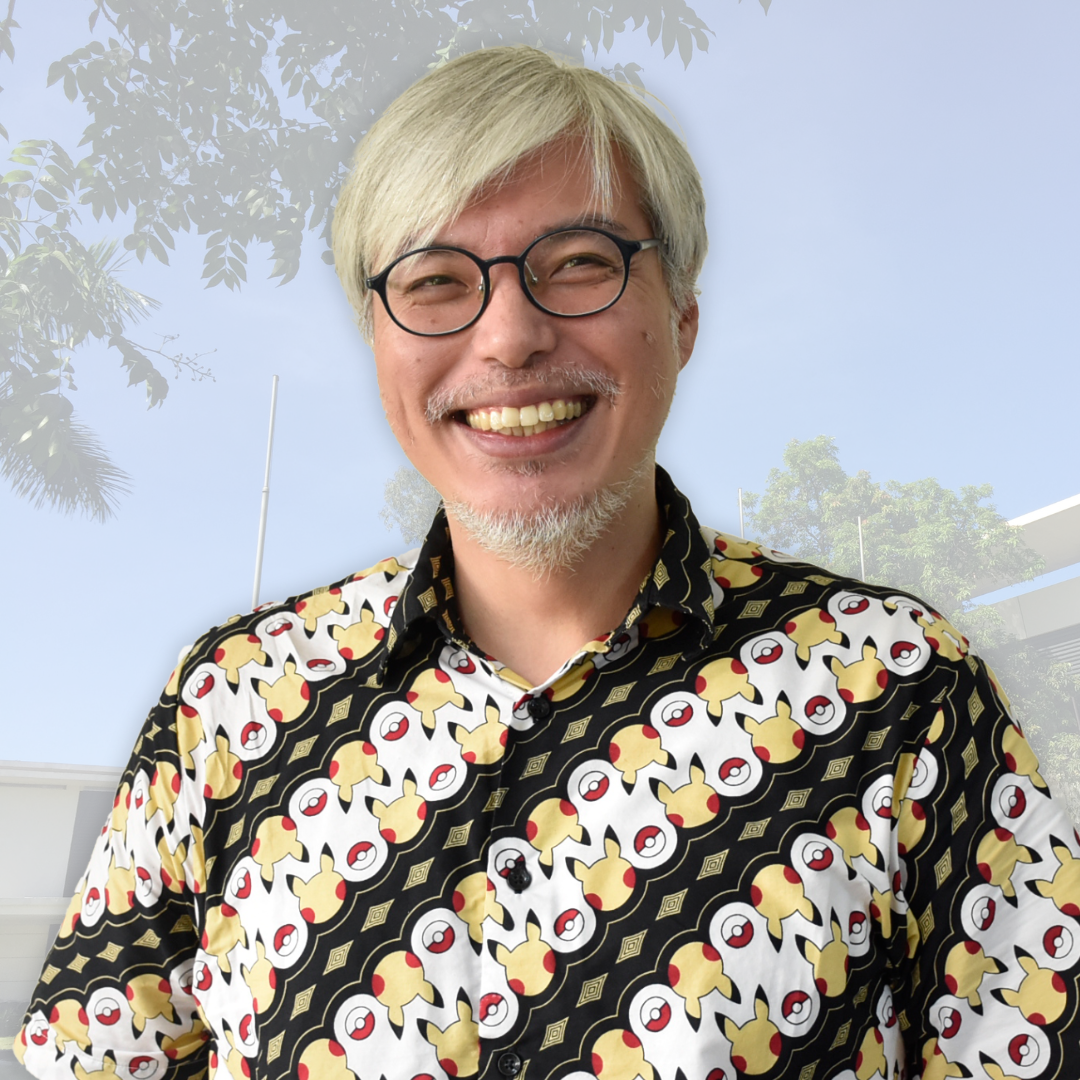
Karl Ian Cheng Chua, Ph.D. is an Assistant Professor at the Asian Center, University of the Philippines Diliman. He served a Professorial Lecturer at the UP Asian Center. He has recently completed his posting as a visiting professor at the Graduate School of Social Sciences, Hitotsubashi University. He serves on the editorial boards of the East Asian Journal of Popular Culture, Comics Studies: Aesthetics, Histories, and Practices, and is Editor-in-Chief of Social Science Diliman.
Leveraging on Infrastructure Development in Oda: Strengthening Strategic Alliances and Diplomatic Supremacy in Asia?
The new wave of development assistance in Asia produced differing variants of development tools--by types, forms, and even modality. It is believed that official development assistance has become more strategically placed in Asian countries, owing to the emerging roles that economies in the region may play, not only economically but also toward achieving security balance. Meanwhile, investing in infrastructure is one of the priorities of any State primarily to spur development benefiting its populace, but also to be competitive in a growing open market in the region. Japan as a donor country, leads in extending bilateral assistance in infrastructure to Asian countries as the growing importance of infrastructure being a catalyst for inter- and intra regional alliances has recently been recognized. The implicit nature of many of these alliances generated a new face of ODA that is driven by greater bilateral and multilateral motives. It is interesting to probe into how infrastructure development in Asia is achieving synergy through development assistance. An analysis is rendered on the contribution of infrastructure development to Asia’s growing influence as a region, and global player in achieving peace and stability. The ODA process reinforces diplomacy and economic ties, while serving as a strategic conduit for achieving greater regional goals.
ALEXANDER MICHAEL PALMA, Ph.D.
Assistant Professor, Asian Center, UP Diliman

Dr. Alexander Michael Palma is an Assistant Professor at the UP Asian Center. His research interests revolve around the field of development studies across a diversity of sectors to include, health, and nutrition, local governance, trade, social entrepreneurship, environment, public finance, project evaluation and monitoring, institutional economics, energy, urban and regional development to name a few. Dr. Palma devoted more than twenty years in development work having been engaged in projects for the United Nations, the World Bank, Japan International Cooperation Agency, the European Union, and Japan Bank for International Cooperation He has also been actively promoting the cause of health and nutrition ofchildren, trade and investment, public finance management, housing, education, civil identity and rights, infrastructure development among others. Dr. Palma contributed works in Japan studies, and received citation for the researches in the fields of local government and decentralization policy. Dr. Palma authored public finance studies at the Philippine Institute of Development Studies or PIDS. He conducted a review of the President’s budget, which involved the analysis of the utilization of the health appropriation.